What Is the Artistic Issue of Environmental Art ââ“ Sometimes Called Earth Art or Earthworks?
What is a Marine Biologist?
A marine biologist is someone who is interested in learning and studying marine organisms and what their lives are like in their natural habitats. There are a vast array of career choices i can selection from - from studying large sea animals and what they eat to investigating environmental conditions that frequently affect them. Everything from whales to microscopic organisms, and everything else in between, tin can become a specialization.
Research projects are at the eye of what most marine biologists do, whether it exist actually collecting specimens in the field, compiling research data, finding real life applications for the research information, or classroom teaching.
What does a Marine Biologist do?
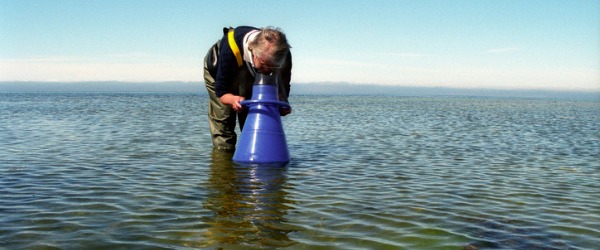
Marine biology is a learning and research field and is an umbrella term that houses many specializations. In a nutshell, marine biologists study a variety of organisms and ecosystems in the ocean and other saltwater environments.
While jobs for marine biologists can vary from place to identify, the following listing includes some full general responsibilities:
- Reviewing enquiry and literature
- Collecting field and samples for analyses
- Researching organisms and their behaviour
- Analyzing organisms in their ocean environment
- Using instrumentation to rails and measure organisms
- Analyzing the health of various components within the body of water environment
- Working to rebuild damaged ecosystems
- Using computer modelling to build predictive data
- Consulting for programs that aim to monitor pollution
- Monitoring environmental compliance
- Cooperating and providing assistance to coast guard units
Senior marine biologists responsibilities tin include:
- Guiding agencies and regulations and so as to monitor ecosystems
- Putting together grant proposals to fund research
- Drafting scientific papers
- Reporting research findings
- Facilitating a team environment with strong advice
- Presenting inquiry findings to policymakers and stakeholders
- Educating the public about issues
- Determining jurisdictions for laws and regulations
- Developing and coordinating the scope of work for projects
- Computing budgets and schedules for projects
- Writing impact statements and environmental assessments
- Sharing information with advocacy organizations
There are many careers that a marine biologist tin branch into. The following are a few examples:
Marine Biotechnologist
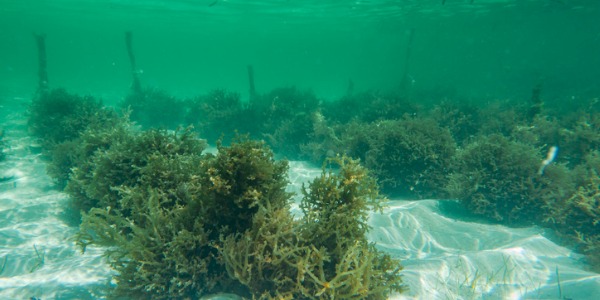
A multifariousness of products can be derived or developed from marine animals and plants. This is the specialized area of marine biotechnology, which besides includes aquaculture (where aquatic organisms are grown for food, fuel, cosmetics, and pharmaceuticals).
Marine biotechnology applications can exist quite diverse and can range from extracting new cancer treatments to seaweed farming. Scientists trained in marine biology, microbiology, chemistry, genomics and bioinformatics are sought out to piece of work for new pharmaceutical companies that concentrate on developing new drugs from marine resources.
Marine biotechnology can exist described as making applied and effective use of marine macro- or microorganisms to make products, technologies, and processes available. It covers areas such equally health, aquaculture, cosmetics, industrial products and processes, food supplement, feed, and plant protection.
Oceanographer
Oceanography can be separated into four distinct areas - biological, concrete, chemical, and geological. Each blazon of oceanographer has different job duties and work environments:
-
Biological oceanographers examine plants, microbes and animals and review how body of water contamination can bear upon marine species. They are similar to marine biologists in that they look at life forms and ecosystems, however they likewise written report how external factors touch on life forms in the oceans. Their main focus is relationships in the ocean. For example, they will research things like thermal vents and the ecology of life around them, or study the chemic result that subaquatic earthquakes tin can take on an ocean's makeup and on the lifeforms that rely on it. Biological oceanographers will also expect at external factors such as storms, trade winds, El Nino, atmospheric pressure, temperature fluctuation etc., and study how these factors might affect an bounding main'due south ecology.
-
Concrete oceanographers focus on understanding body of water circulation patterns and fluid motion past studying the body of water'due south attributes (temperature, salinity, waves, currents and tides). Physical oceanography can be divided into descriptive and dynamical physical oceanography. Descriptive physical oceanography is research of the ocean through observations and complex numerical models which try to describe the fluid motions every bit precisely as possible. Dynamical concrete oceanography specifically looks at the processes that control the movement of fluids, mainly with theoretical research and numerical models.
-
Chemical oceanographers look at the chemical composition of the ocean and its interaction with the environment. They study information technology's acidity and try to empathize how the biological science and ecology of an body of water might exist contradistinct based on a changing chemical profile (many plants and animals don't do well in sure acidities and cannot flourish when seawater is too acidic or non acidic plenty). When an ocean'due south chemic composition becomes besides unbalanced, it tin can have an extreme effect on the ecology.
-
Geological oceanographers (or geophysical oceanographers) research the body of water flooring and use geophysical technologies to examine the makeup of the ocean bedrock and the processes of rock movement. Many work in fossil fuel prospecting (searching for new oil and gas pockets), understanding how subaquatic tectonic plates work, mapping and dating rock formations, surveying ocean geological features, or in ensuring sustainability of our ocean floors (protecting them from man activeness such as mining).
Aquarist
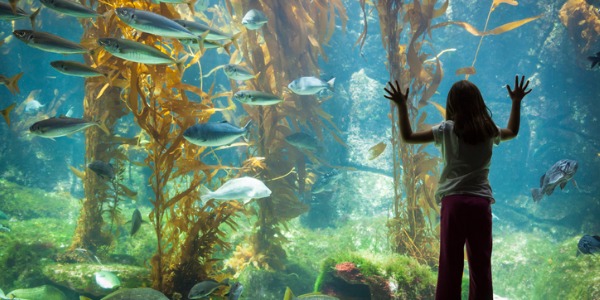
Aquarists care for marine life in aquariums past feeding and observing them and by maintaining their living environments. This career ofttimes requires a great deal of physical activeness and time spent under h2o.
Aquarists are in charge of keeping the h2o and tanks clean and at the right temperature, and sometimes fixing damaged equipment. They oft take easily-on interactions with the fish and other underwater creatures in order to detect whatsoever indication of injury or illness (beingness a certified diver is typically a prerequisite) and they capture sick animals so they tin can be seen by a veterinarian. Aquarists may besides provide presentations to educate the public or blueprint exhibits for the aquarium. They may likewise be required to travel to other locations to collect specimens that could be used in the aquarium.
Hydrologist
Hydrologists analyze water resources and report the distribution, circulation and concrete properties of surface and surreptitious waters. They usually work in a specialized area such as rivers, oceans, or groundwater, and often help environmental scientists preserve and clean up the environment. Water properties are studied, such equally the effects of erosion, pollution, or the cycles of water flow by using computer prediction models. Hydrologists might also come up with proposals for wastewater systems, hydroelectric power, or sustainable uses of irrigation. These proposals as well as written reports on any findings may be presented to the public or to the authorities.
Ichthyologist
An ichthyologist studies all fish species and is knowledgeable well-nigh their behaviour, developmental patterns, and reproductive habits. Some ichthyologists work in museums and educate the public about fish species and conservation awareness. Diving certification may be needed for underwater enquiry. When working out in the field, ichthyologists collect samples, measure out, and record data. They then examine and record their specimen findings in the lab. At times, ichthyologists come across new types of fish and may even have the privilege of naming a new species.
Many ichthyologists go on to earn main'due south or doctoral degrees, which allow more opportunity for specializing and offer options in enquiry and academia. Those that piece of work in conducting enquiry spend time writing and publishing scientific papers and writing proposals to secure grants that will fund research projects. They will as well give lectures and participate in student projects.
Marine Mammalogist
Marine mammalogists study the behaviour and habits of marine mammals. They tin cull to specialize in:
- cetaceans (whales, dolphins, and porpoises)
- pinnipeds (seals, sea lions, and walrus)
- manatees
- other aquatic mammals (polar bears and sea otters)
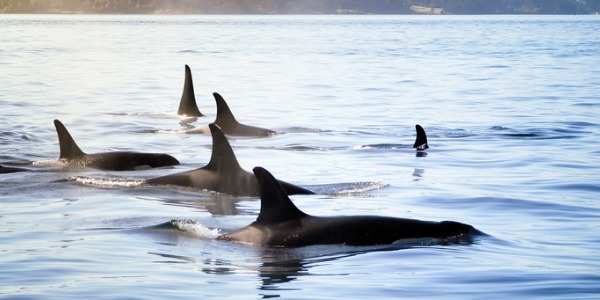
Marine mammalogy covers several areas:
- history (the report of how a species lives)
- taxonomy and systematics (study of their classification and evolution)
- anatomy and physiology
- ethology (behaviour)
- environmental (how they interact with their environs)
A marine mammalogist may choose to piece of work in a specific surface area, such every bit inquiry, educational activity, preparation, or rehabilitation. Some go even further and study only one attribute of a specific species, such as the behavioural interactions of whales. Many marine mammalogists work exterior conducting studies in the ocean and wetlands, frequently relying on equipment such as scuba gear, sonar devices, video equipment, computers, robotic instruments, boats, traps, and nets. Researchers collect and clarify data, design studies, supervise research assistants, write grant proposals, and publish written report findings in professional journals.
Fishery Biologist
Fishery biologists study fish for various reasons: to increase the number of endangered species; to subtract the number of overpopulated species; to help conserve natural habitats; to understand how fish answer to diseases (in hopes of finding medical cures for humans); and to encounter how the environment affects the life cycles of fish (urban development and industrial waste can negatively bear upon various fish habitats).
Some fishery biologists collect samples and certificate statistics while on a boat. Others behave experiments in fish hatcheries or virtually streams and lakes. Marine fishery biologists focus on fish that alive in the ocean while fishery limnologists work with freshwater fish.
Professor/Teacher
Marine biology is a learning and research field, and many marine biologists, therefore, work in coordination with universities and other educational institutions. In fact, many marine biologists are too teachers and professors during the winter months when less piece of work is existence done in the field. An academic career starts past obtaining a Doctorate before moving on to research assistant, lecturer, and professor.
What is the workplace of a Marine Biologist like?
Oceanography centres, laboratories, aquariums, research boats and vessels are some of the possibilities for field workplaces. It would not exist unusual to find a marine biology graduate working in a tide pool, a swamp, a mangrove forest, a coral reef, or whatever place on world that supports marine life. Travel to interesting places is one of the possible perks for a career in marine biological science.
Laboratory work could involve working directly with the federal government, or the Environmental Protection Bureau (EPA), or on behalf of a university'south enquiry program. Virtually every body of salt water on the planet is being studied by marine biologists, from the Caribbean seas to the chill body of water. Nonprofit organizations are also a major employer for marine biology graduates since they fund studies and research projects for commercial products. Drug companies bear marine enquiry every bit well, as marine life is frequently at the cutting edge of research.
Often Asked Questions
Is there a lot of travel associated with being a marine biologist?
Travel is actually dependant on what type of marine life yous are going to study. If yous piece of work in a lab, and then patently you will do very little travelling, if at all. If yous get a job at the zoo or at an aquarium, the position volition be based at that place, with perhaps the occasional demand to travel for a inquiry projection. If you are researching the migration of whales or are doing deep sea enquiry, so you can wait to be travelling and to be out at sea for extended periods of time.
Continue reading
What is some good communication for marine biology students?
-
The best way to learn nearly marine life and how the sea works is to do enquiry. Talk to your professors, and get to know them. It is ane of the best investments y'all can make as they are the ones that are running the labs and doing the research. They also know other professors/scientists doing research, and know who needs help, with what, and where.
-
If you are interested in scuba diving, learning how to dive is a valuable skill. One of the quickest ways to get in with the researchers at a academy is to know how to dive. Researchers are always looking for divers, and you'll probably get many offers to help out with various research projects.
-
Have some computer programming courses. Scientists live in a globe of data, so knowing how to program is essential.
-
Consider taking a inquiry semester abroad. There are quite a few programs that will permit you lot to go away, practice research, and get form credit.
Proceed reading
What is it like beingness a marine biologist?
The wonderful thing near a career in marine biological science is how varied the work is. Because the specific subject areas one tin can focus on are almost limitless, there really isn't a typical day for a marine biologist. Some might research the migration of whales, while others might report the tiny plankton, microbes, and fifty-fifty the seawater itself.
A twenty-four hour period for one marine biologist might involve scuba diving for mussels in the morning, bringing them back to the lab for observation in the afternoon, recording whatever relevant data, and doing some statistical analysis (using a computer) by comparing studies already done by other scientists. A day for another marine biologist may be teaching undergraduate students or guiding postgraduate students into the world of discovery research.
Many marine biologists focus on research papers. For case, a marine biologist may study the furnishings of oil or chemic spills released into the ocean on establish and fauna life. They may then nowadays their inquiry papers at scientific conferences, and/or publish the results of their research in scientific journals.
Proceed reading
Steps to becoming a Marine Biologist
A fascination with marine life at a young age is often the goad for an teaching and a career in marine biology. Perhaps the greatest claiming presented past the diverse field is choosing ane among many marine sciences occupations.
How long does it take to get a Marine Biologist?
About positions in the field of marine biology call for a Primary'due south degree. The typical education track, therefore, lasts between five and half dozen years. The rails is extended for individuals who pursue educational activity or independent research roles, which commonly require a Ph.D.
Bachelor'south Degree – iv years Master'south Degree – one to 2 years Doctorate Degree – three to four years
Are Marine Biologists happy?
Marine biologists rank among the happiest careers. Overall they rank in the 95th percentile of careers for satisfaction scores. Please note that this number is derived from the data we take collected from our Sokanu members simply.
95% Happy! While there may non exist hard information to explain this rather amazing statistic, it may, quite but, have its basis in the undeniably joyous aspiration of marine biological science: to understand and protect the planet through the meeting of humans and other species.
What are Marine Biologists like?
Based on our pool of users, marine biologists tend to exist predominately investigative people. This characteristic is emblematic of theses scientists. They venture into seas and oceans to observe marine life and their behavior patterns. They carry assay on the data they collect. They carry enquiry and controlled experiments. They study the impact of homo activities, with a view to shaping policies on marine conservation. They are, in so many ways, investigators.
Should I become a Marine Biologist?
Before committing to a career in marine biology, make sure that yous have sure personality traits, that you possess or are prepared to cultivate some specific skills, and that you have a realistic view of the job!
Required Personality Traits & Skills
- Interest in, curiosity nearly, appreciation for different forms of marine life
- Interest in the scientific process
- Ability to employ logic and reasoning to solve problems
- Passion for conducting inquiry and synthesizing data
- Commitment to producing unbiased inquiry results
- An inquiring mind, attention to detail, and excellent observation skills
- Predilection for working with specialized equipment and instruments
- Proficiency in scientific and analytical software
- Stiff organizational and record keeping skills
- Ability to excel in a team environment and effectively bargain with differences in opinion
- Stamina to endure long hours of fieldwork
Facts about the Job
It's non all glamorous So, you lot desire to talk to the manta rays and plunge into warm, crystal articulate tropical waters. That is the prevailing image of the job. It is not the prevailing reality. While marine biologists practice sometimes accept the chance to go shut to astonishing marine life, their work isn't just nigh exciting dives and shut encounters with deep sea creatures. Research is not express to the warm sunshine of the South Pacific. It can also accept place during monsoons and rainy seasons or in the freezing cold and stormy waters of the Chill, the Baltic, and the Irish Sea. At times, there are boring administrative tasks to complete and research reports and funding proposals to write. And fourth dimension spent in the field conducting primary research tin exist long and ho-hum.
It's not just well-nigh dolphins The myth is that marine biology focuses primarily on large mammals like dolphins and whales. The truth is that it is extraordinarily various. It involves the investigation of numerous habitats and animals, from miniscule larvae to massive cetaceans. Marine biologists too study invasive species and toxic algae. In fact, very few students end up working with marine mammals.
Information technology'southward about patience Working in the field can be fascinating. But it can likewise be frustrating. Many a marine biologist can tell stories of spending months onboard a enquiry vessel or on a remote island and coming back with no useful data, simply considering the creature they were looking for did non show up. This is not a task for the impatient.
Studying is for life There is i particular, very simple truth nearly being a marine biologist and information technology is this: To keep up with the pace of scientific discipline, you volition exist studying for your entire life. You volition come to appreciate the wonders of chemistry or a math formula. While the prospect of lifelong learning is enticing for many people, make sure that y'all are i of them before committing to the career.
Water versus lab / Wetsuit versus laptop Peradventure the most important thing to realize as yous consider this career is that marine biologists spend more time in the lab and with their laptop than in the water and with their wetsuit. Databases, statistics, and Excel spreadsheets are an integral part of their daily life. They are obsessed with and passionate well-nigh data collection and information analysis.
However…
Being a marine biologist means meeting a lot of interesting and inspiring people from all over the globe.
Some marine biologists are incredibly lucky to piece of work for at least a function of their lives in beautiful tropical locations, diving among sharks, mantas, whales, dolphins, and schools of fish.
Marine biologists' passion and research can inspire change and quite literally, assistance salvage the planet.
Marine Biologists are also known as:
Ocean Biologist Marine Scientist Marine Life Biologist
Source: https://www.careerexplorer.com/careers/marine-biologist/
0 Response to "What Is the Artistic Issue of Environmental Art ââ“ Sometimes Called Earth Art or Earthworks?"
Postar um comentário